
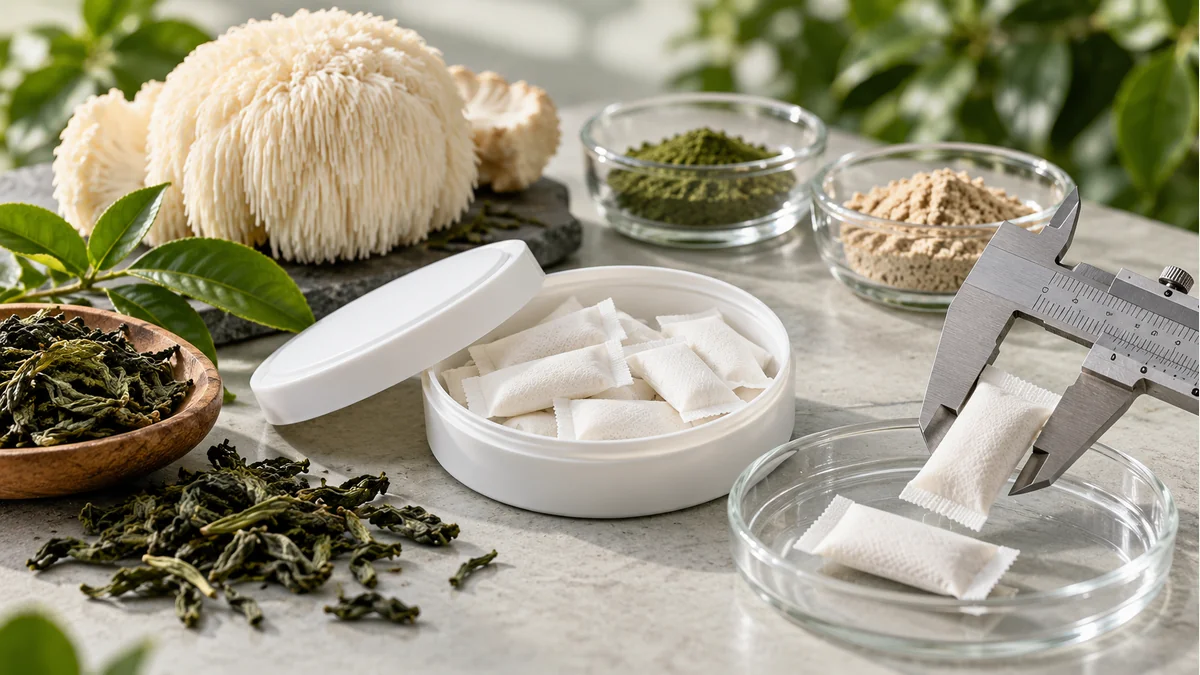
Buyer’s answer: A child-resistant catalog description is not a test certificate. Request evidence for the complete pack design and the standard relevant to the destination market.
Identify the tested configuration
Ask which can body, lid, material and closure version were tested. Changes to the construction can affect whether an older report remains relevant. Keep the report connected to the exact model and final assembly.
Review the report scope
Check the test standard, laboratory, sample configuration, date and conclusion. A triangle symbol or difficult-to-open impression is not a substitute for the report. The market review determines which packaging requirements apply to the finished caffeine product.
Keep user instructions consistent
The approved closure instructions, artwork and finished pack should describe the same action. Review whether opening and reclosing remain clear after labeling. Avoid claiming certification until the relevant evidence has been confirmed.
What to put in the project record
| Decision | Project specification |
|---|---|
| Product identity | Child-resistant pouch cans |
| Approved reference | Formula revision, sample, packaging drawing and artwork, as applicable. |
| Evidence to request | The specification, relevant test records and market review supporting the decision. |
| Next discussion | Confirm remaining assumptions, responsibilities and acceptance criteria before production. |
Questions to take to your supplier
What should a buyer confirm first?
A child-resistant catalog description is not a test certificate. Request evidence for the complete pack design and the standard relevant to the destination market.
Where can we discuss this for our own product?
Send the formula direction, caffeine target, destination market, packaging and quantities through the project enquiry form. Production starts at 3,000 cans per SKU and 9,000 cans per order.
Explore the related product or service Discuss your own brief
Sources and review notes
Prepared for B2B product-development planning. Supplier-specific specifications, laboratory methods and destination-market advice determine the final project requirements.
- FDA: general consumer information on caffeine
- EFSA: caffeine topic and scientific assessment background
Reviewed 25 October 2026. These general sources do not establish approval, safety or performance for a particular finished pouch.